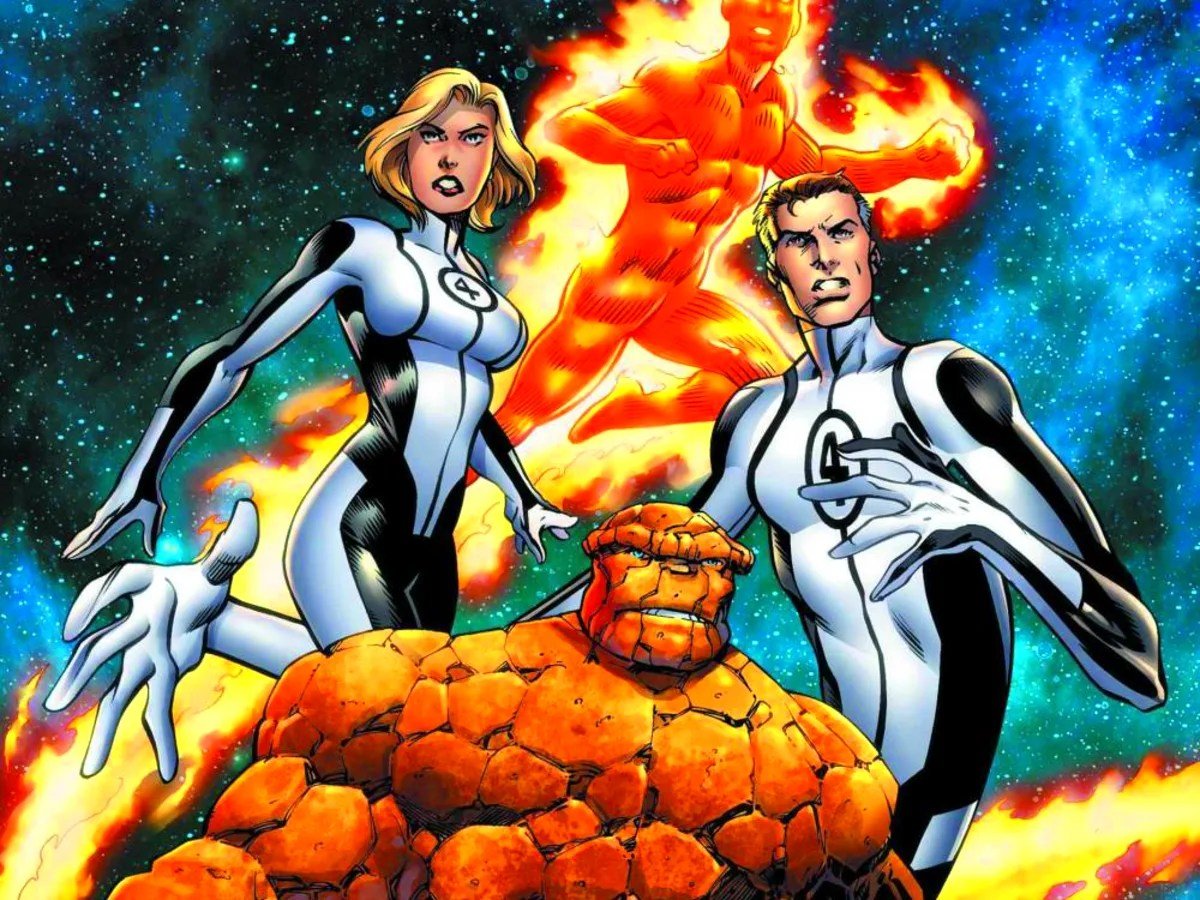
The Fantastic Four, Marvel's foundational superhero family, have faced a cinematic journey riddled with more missteps than triumphs. For decades, filmmakers have grappled with adapting Reed Richards, Sue Storm, Johnny Storm, and Ben Grimm to the big screen, often resulting in critical drubbings and fan disappointment. A comprehensive Comparative Analysis with Other Fantastic Four Films isn't just an academic exercise; it's a vital autopsy to understand what went wrong, what glimmer of potential exists, and how the upcoming Marvel Cinematic Universe (MCU) iteration can finally get it right.
This isn't merely a recap; it's a deep dive into the creative decisions, production woes, and resulting impact of each attempt, offering clear lessons for future adaptations and for anyone trying to bring complex intellectual property to life.
At a Glance: Fantastic Four on Film
- 1994's The Fantastic Four (Roger Corman): A never-released, low-budget curiosity praised for its character accuracy and family feel, despite its obvious technical limitations.
- 2005's Fantastic Four (Tim Story): Fox's first official attempt. A box office success but a critical mixed bag, remembered for strong casting choices like Michael Chiklis as The Thing, but criticized for campiness and shallow character development.
- 2007's Fantastic Four: Rise of the Silver Surfer: An improvement over its predecessor, introducing a standout Silver Surfer, but ultimately hindered by a weak plot and a controversial portrayal of Galactus.
- 2015's Fantastic Four (Josh Trank): Widely considered the worst adaptation, a messy, rushed production driven by studio interference and a fundamental misunderstanding of the source material.
- The MCU's Future: Hope reigns supreme for the upcoming film, with early conceptual descriptions (as presented in some analyses) suggesting a deeply faithful and visually stunning approach, aiming to finally deliver the definitive live-action Fantastic Four.
The Enduring Allure of Marvel's First Family
Before we dissect the filmography, it's crucial to grasp why the Fantastic Four remain so compelling, despite their cinematic struggles. Created by Stan Lee and Jack Kirby, they represent the original superhero family — a team of scientists and explorers whose powers are inextricably linked to their personal relationships. Their stories blend cosmic adventure, scientific discovery, and interpersonal drama, making them unique in the Marvel pantheon. It's this blend that makes them both incredibly rich source material and notoriously difficult to adapt.
The Unseen Pioneer: Roger Corman's The Fantastic Four (1994)
The very first live-action Fantastic Four film stands as a legendary curio, a cinematic ghost that almost nobody saw legally. Produced on a shoestring budget of roughly $1 million by legendary B-movie producer Roger Corman, this film was never intended for theatrical release. Its primary purpose was for Constantin Film to retain the movie rights to the property, a common practice in the early 90s when Marvel Comics faced financial difficulties.
What it Got Right (Surprisingly):
Despite its evident limitations, Corman's Fantastic Four has garnered a cult following precisely because it understood the heart of the team. The film's low budget forced it to lean heavily on character interaction, and in this, it shone. Joseph Culp's Doctor Doom, for instance, felt genuinely menacing and cunning, a stark contrast to later iterations. More importantly, the core four — Reed, Sue, Johnny, and Ben — felt like a family. Their camaraderie, bickering, and loyalty were palpable, arguably making them the most comic-accurate depiction of the team until the highly anticipated MCU film. It grasped the essence of Ben Grimm's struggle and Johnny Storm's youthful exuberance, even if the visual effects for their powers were rudimentary at best.
What it Missed (Predictably):
The budget was its Achilles' heel. The costumes looked cheap, the action sequences were minimal, and the portrayal of powers, particularly for The Thing and Human Torch, was severely restricted due to cost. There was no grand cosmic adventure or stunning visual spectacle here.
Its Legacy:
Though never officially released, bootleg copies circulated widely, building its myth. Its fascinating backstory was eventually chronicled in the 2015 documentary, Doomed: The Untold Story of Roger Corman's Fantastic Four, cementing its place as a pivotal, if unseen, chapter in the team's cinematic history. It demonstrated that even without blockbuster budgets, understanding character is paramount.
Fox's First Foray: Fantastic Four (2005) & Rise of the Silver Surfer (2007)
After Corman's unreleased attempt, 20th Century Fox acquired the rights, leading to two mainstream adaptations directed by Tim Story. These films represented Hollywood's first big-budget attempt to introduce Marvel's First Family to a wider audience.
Fantastic Four (2005)
The 2005 film was Fox's official debut for the team, and it arrived in a pre-MCU landscape where superhero films were still finding their footing. It was a box office success, grossing over $330 million worldwide, proving there was an audience for the characters.
Strengths:
The casting was a significant point of praise, particularly Michael Chiklis as Ben Grimm/The Thing. His physical portrayal, combined with a committed performance, made him the "undisputed highlight." The film's origin story was generally effective, swiftly getting the team into their powers and showcasing their initial adjustments. Chris Evans as Johnny Storm also brought a charismatic energy to the Human Torch, even if his characterization wasn't always spot-on.
Weaknesses:
Despite its box office success, the film suffered from a fundamental campiness that felt dated even upon release. Characterization was a major hurdle: Reed Richards (Ioan Gruffudd) was often portrayed as stiff and uninteresting, while Sue Storm (Jessica Alba) felt objectified, rarely given the agency and intelligence characteristic of her comic book counterpart. Johnny Storm, while charismatic, frequently bordered on being an overbearing bully, missing the underlying heroism. The film was criticized for its lack of depth, poor special effects in key moments, and a generally boring narrative outside of a couple of action sequences. Doctor Doom, portrayed by Julian McMahon, was a significant letdown, stripped of much of his gravitas and intellect.
Fantastic Four: Rise of the Silver Surfer (2007)
The sequel, Rise of the Silver Surfer, released two years later, was generally considered an improvement over its predecessor but still grappled with core issues that plagued the franchise. It performed decently at the box office, earning over $289 million worldwide, but not enough to greenlight a planned third film.
Improvements:
A major highlight was the introduction of the Silver Surfer, voiced by Laurence Fishburne and motion-captured by Doug Jones. His tragic backstory and cosmic presence were a breath of fresh air. Johnny Storm's character also saw significant development, making him more likable and less of a one-note prankster. Michael Chiklis remained a strong presence as The Thing.
Persistent Issues:
Unfortunately, the fundamental mischaracterizations of Reed and Sue continued. Reed remained largely bland, and Sue's agency was still undercut. The film's biggest misstep, however, was its portrayal of Galactus. Instead of the iconic, colossal, purple-clad entity from the comics, he was depicted as a swirling cosmic cloud, a "major disappointment" that sapped the world-eater of his immense threat and presence. The plot, focusing on an impending wedding amidst a galactic threat, felt weak, and the film ultimately felt out of step with the burgeoning superhero genre, releasing just a year before Iron Man and The Dark Knight redefined the landscape.
The Catastrophic Reboot: Fantastic Four (2015)
The 2015 Fantastic Four reboot, directed by Josh Trank, holds the dubious distinction of being widely regarded as the worst film adaptation of the team. Like the 1994 film, its genesis was rooted in studio politics: 20th Century Fox desperately rushed it into production to avoid losing the film rights back to Marvel Studios.
A Litany of What Went Wrong:
This film was plagued by problems from concept to release. It was rushed, narratively incoherent, and utterly boring. It deviated wildly from the source material, skipping crucial character beats like the team learning to use their powers, and delivered very little actual superhero action. Doctor Doom's portrayal in this film was universally condemned as the absolute worst, a bland, unthreatening, and ultimately forgettable villain.
The production itself was notoriously troubled, with director Josh Trank publicly acknowledging significant changes to the story during filming and expressing dissatisfaction with the final cut. Studio interference was rampant, leading to a disjointed and unsatisfying product.
Box Office and Aftermath:
The film was a massive box office failure, grossing just over $168 million globally, making it one of the lowest-earning comic book films of its era. Its dismal performance effectively killed any plans for a sequel or a crossover with Fox's X-Men universe. The casting, which included Miles Teller as Reed Richards and Michael B. Jordan as Johnny Storm, was initially met with some curiosity, but ultimately, not even talented actors like the 2015 Fantastic Four cast could salvage the deeply flawed material they were given.
Lessons Learned: Dissecting the Failures
Looking back at these attempts, several critical pitfalls emerge that future adaptations must avoid:
- Misunderstanding Core Characters: Each film, to varying degrees, failed to capture the nuanced personalities of the FF. Reed's genius must be tempered with his social awkwardness, Sue's strength must be more than just invisibility, Johnny needs to be more than a hothead, and Ben's pathos must be central.
- Rushed Narratives & Studio Interference: Both the 1994 and 2015 films were driven by rights issues, leading to rushed development and production. The 2015 film, in particular, suffered from heavy studio meddling that fragmented the director's vision.
- Poor Villains: Doctor Doom, one of Marvel's greatest antagonists, was consistently mishandled across all three Fox iterations. He was either underwritten, underutilized, or poorly conceived. Galactus's cloud form in 2007 was another massive letdown.
- Lack of Cosmic Scope: The Fantastic Four are explorers of the cosmos and other dimensions. The Fox films largely grounded them, missing the sense of wonder and epic scale that defines many of their best stories.
- Weak VFX & Action: While the 1994 film had budget constraints, the later Fox films, despite their larger budgets, often featured unconvincing special effects or lacked truly memorable superhero action sequences.
- The "Family" Dynamic: Corman's film understood this best. The Fantastic Four are first and foremost a family, and their powers complicate, rather than define, those relationships. When this core dynamic is absent or superficial, the films lose their emotional anchor.
- Balancing Sci-Fi Wonder with Human Drama: The best FF stories balance grand scientific discovery and interdimensional travel with the very human struggles of living with incredible powers and maintaining family bonds. Many adaptations have struggled to find this delicate balance.
A Glimmer of Hope: The MCU's Approach
After years of speculation and the eventual reacquisition of the rights, Marvel's First Family is finally set to join the Marvel Cinematic Universe, sparking immense anticipation and hope among fans.
The Hypothetical "First Steps" (As Envisioned in Early Analyses)
Though purely conceptual at this stage, analyses of ideal Fantastic Four adaptations often paint a picture that directly addresses the failings of previous films. One such vision, "The Fantastic Four: First Steps" (as described in some thought experiments), positions itself as the definitive adaptation, finally "mastering all four members."
Why It's Hailed as the Best (Conceptually):
- Perfect Casting: The proposed casting of Pedro Pascal (Reed Richards), Vanessa Kirby (Susan Storm), Joseph Quinn (Johnny Storm), and Ebon Moss-Bachrach (Ben Grimm) is often cited as a dream team, capable of bringing depth, charisma, and comic accuracy.
- Character Integrity: This vision emphasizes Reed's genius, leadership, and inherent flaws; Sue's strength, intelligence, and emotional core; Johnny's evolution from hothead to hero; and Ben's heart and struggle.
- Family Focus: The foundational aspect of the team as a family unit is paramount, allowing their relationships to drive the narrative.
- Cosmic Scope & Visuals: Such a film would embrace the cosmic side of Marvel, featuring stunning visuals that bring to life the wonders and dangers of space exploration.
- Compelling Villains: With access to the full MCU resources, the film could finally deliver truly formidable versions of villains like Galactus and Silver Surfer, restoring their comic book gravitas. This theoretical film even boasts an incredibly high Rotten Tomatoes score, suggesting it rectifies every past mistake.
The Upcoming MCU Fantastic Four Film
The actual upcoming MCU Fantastic Four film is one of the most anticipated projects in Marvel's Phase 6, carrying the immense pressure of living up to decades of expectation and atoning for past cinematic sins.
What We Know and What We Hope For:
- New Creative Team: With director Matt Shakman (known for WandaVision) and writers Jeff Kaplan and Ian Springer, the film promises a fresh perspective.
- Tone: The intention is to adopt a more mature and potentially darker tone, aligning with contemporary superhero film trends while hopefully maintaining the core family-friendly adventure spirit of the FF.
- Faithfulness to Source Material: Marvel Studios has consistently demonstrated a commitment to comic book accuracy while adapting stories for a modern audience. The promise is a film that takes a more faithful approach, drawing directly from the rich lore of the comic books.
- Casting: While actors have yet to be officially announced, the expectation is for a new, diverse cast that embodies the spirit of the characters and brings new energy to the franchise.
The MCU's track record for integrating beloved characters into its expansive universe offers a strong basis for optimism. By learning from the clear missteps of previous adaptations — the character misunderstandings, the rushed productions, the lack of cosmic scope, and the failure to capture the essential family dynamic — the MCU Fantastic Four has the potential to finally deliver the definitive live-action portrayal that fans have craved for so long.
Crafting the Ultimate Fantastic Four Adaptation: Key Criteria
Based on our Comparative Analysis with Other Fantastic Four Films, a successful adaptation must nail these critical elements:
- Unwavering Character Integrity: Each member must be instantly recognizable from the comics, not just visually, but in personality and motivation. Reed's curiosity, Sue's maternal strength, Johnny's reckless charm, and Ben's heartfelt gruffness are non-negotiable.
- The Family at the Core: Their powers are a circumstance, not their identity. The dynamic between them—the love, the squabbles, the unwavering loyalty—must be the emotional bedrock of the film.
- Embrace Cosmic Exploration and Scientific Wonder: The FF are explorers first. Their adventures should take them beyond Earth, showcasing alien worlds, interdimensional travel, and the boundless possibilities of science, rather than being confined to street-level threats.
- Compelling, Comic-Accurate Villains: Doctor Doom deserves his rightful place as Marvel's greatest villain—an intelligent, formidable, and tragically complex adversary. Galactus, Silver Surfer, and other cosmic threats must be portrayed with their full power and gravitas, respecting their iconic designs and motivations.
- Balance Spectacle with Story: Visual effects must serve the narrative, not overwhelm it. The film should deliver breathtaking action and stunning cosmic visuals, but these should enhance, rather than replace, a strong, character-driven plot.
- A Sense of Optimism and Discovery: Unlike some darker superhero narratives, the Fantastic Four's adventures often carry a spirit of optimism, discovery, and the boundless potential of human ingenuity (and its occasional consequences).
Moving Forward: The Future of Marvel's First Family on Screen
The history of Fantastic Four films is a cautionary tale, a testament to how even beloved characters can be mishandled when creative vision falters or corporate pressures override artistic integrity. Yet, it also illuminates the enduring appeal of these characters and the blueprint for their success.
The upcoming MCU Fantastic Four film stands on the shoulders of these past attempts, armed with the lessons learned from their successes and, more importantly, their failures. By prioritizing character, embracing the family dynamic, venturing into the cosmic, and honoring the source material, the MCU has an unprecedented opportunity to not just adapt Marvel's First Family, but to finally celebrate them. The hope is that this next chapter will not merely be another entry in the Comparative Analysis with Other Fantastic Four Films, but finally, the gold standard all future superhero team-ups aspire to.